
Priority rules in the Netherlands: who goes first
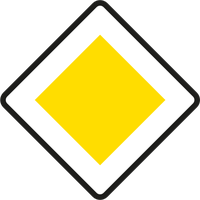
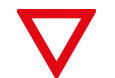
At a junction without signs or traffic lights, traffic from the right goes first in the Netherlands, cyclists included (RVV article 15). Signs change that: on a priority road (sign B1) you go first, and at shark's teeth or a give-way sign (B6) you give way. Trams always go first at an equal junction, and pedestrians on a zebra crossing must be let across.

The order: who decides
When several things tell you what to do, the RVV sets the order:
- A traffic controller or police officer goes above everything (article 84).
- Traffic lights go above signs that regulate priority (article 64).
- Signs and road markings go above the general rules (article 63).
- The general rules, such as traffic from the right, apply when nothing else does.
Traffic from the right
At an equal junction you give way to drivers coming from your right. In the Netherlands 'drivers' includes cyclists and moped riders, so a cyclist from the right goes first. There are two exceptions in the same article: traffic on an unpaved road gives way to traffic on a paved road, and everyone gives way to trams.
Signs that change priority
| Sign or marking | What it means for you |
|---|---|
| B1, priority road (yellow diamond) | You go first at every junction, until sign B2 |
| B3, B4, B5, priority junction | You go first at the junction ahead; side roads give way |
| B6, give way, often with shark's teeth | Give way to traffic on the road you join |
| B7, stop | Stop completely, then give way |
Turning
When you turn, you let through traffic on the same road that comes towards you or is next to or just behind you, including cyclists and pedestrians going straight on (article 18). Turning left, you also let oncoming traffic that turns right go first.
Pedestrians and special cases
- Pedestrians who are on a zebra crossing, or clearly about to cross, go first (article 49). So does anyone with a white cane, and anyone who has difficulty moving.
- Emergency vehicles with blue lights and a siren go first (article 50).
- You may not cut through a military convoy or a funeral procession (article 16).
- Coming out of an exit (uitrit), or pulling away from the kerb, you let all other traffic go first (article 54).
On the theory exam, priority is one of the largest topics, often with a photo of a junction and the question who goes first. Learn the order above and the signs: Dutch road signs explained.
Frequently asked questions
Who has priority at a junction without signs in the Netherlands?
Traffic from the right, cyclists included (RVV article 15). Two exceptions: traffic on an unpaved road gives way to traffic on a paved road, and everyone gives way to trams.
Do cyclists have priority in the Netherlands?
Cyclists follow the same priority rules as drivers. So a cyclist from the right goes first at an equal junction, and when you turn you let through cyclists going straight on.
Do I have to stop for pedestrians at a zebra crossing?
Yes, for pedestrians who are crossing or clearly about to cross (RVV article 49). You may not overtake just before or on a zebra crossing either.
Who has priority on a roundabout?
Most Dutch roundabouts have shark's teeth and a give-way sign (B6) at the entry, so traffic on the roundabout goes first. Without those signs, the normal rule applies: traffic from the right.
What if a police officer gives a different signal?
Signals from a traffic controller or police officer go above signs, traffic lights and rules (RVV article 84).
Sources, checked on 8 October 2026:
Written by Nawfal Serraji, traffic law specialist and founder of HaalTheorie.